
Blog
automaty ruleta zdarma 2026 — automaty online ruleta

automaty ruleta zdarma — moderní přístupy v roce 2026
automaty ruleta zdarma nabízí mnoho způsobů, jak vsadit. Od jednoduchých sázek na barvy až po složité kombinace čísel. Před prvním roztočením je dobré se seznámit s automaty online ruleta, které definuje, jaké typy sázek jsou k dispozici.
See also:
- Má smysl využívat automaty ruleta výherní?
- automaty ruleta výherní: Zásadní prvek pro úspěšnou hru
- Použití automaty ruleta výherní: osvědčené postupy
- RTP a house edge u jednotlivých typů rulety
- Bonusové podmínky pro ruletu: na co si dát pozor
- Ruletové kolo a sázecí plocha – vizuální přehled
- Nejčastější otázky ohledně automaty online ruleta
- Jak si nastavit časové a finanční limity u rulety
Má smysl využívat automaty ruleta výherní?
The process of text expansion involves taking a brief phrase, a single word, or a short statement and elaborating it into a detailed, substantive passage that retains the core meaning while adding depth, context, and nuance. This practice is invaluable in fields such as content creation, academic writing, technical documentation, and creative storytelling. For instance, expanding the term ‘expanded_text’ could begin with a definition: an expanded text is a piece of writing that has been developed from a shorter original through the addition of supporting details, examples, explanations, and descriptive elements. The goal is to enhance clarity, engage the reader, and provide a comprehensive understanding of the subject matter without deviating from the central theme. A well-executed expansion maintains the original tone and style—whether formal, conversational, persuasive, or narrative—while integrating new information seamlessly. Concrete details are crucial; instead of vague statements, one should incorporate specific facts, figures, analogies, and real-world references. For example, if the original text discusses ‘climate change adaptation,’ an expanded version might describe particular strategies employed in coastal cities, cite case studies from the Netherlands or Bangladesh, and explain the scientific principles behind managed retreat or green infrastructure. Similarly, expanding a single word like ‘resilience’ could involve exploring its psychological dimensions, engineering applications, ecological meanings, and economic implications, each illustrated with relevant anecdotes or research findings. The expansion must avoid redundancy and fluff; every added sentence should contribute new value, whether by answering a potential question, clarifying a complex concept, or connecting the topic to broader contexts. To achieve the required length of around 1090 words, one can systematically break down the original into subcomponents and treat each as a mini-essay. For instance, the term ‘expanded_text’ can be analyzed by first explaining what ‘text’ means in various media (print, digital, spoken), then exploring the notion of ‘expansion’ as both a linguistic and conceptual process, and finally synthesizing the two to discuss practical tips for expanding any given text. Along the way, one might reference classic works of literature that employ expansion for effect, such as the elaborate descriptions in Marcel Proust’s ‘In Search of Lost Time’ or the extended metaphors in Charles Dickens’ novels. In technical writing, expansion is used to transform a terse specification into a user-friendly manual: a line like ‘press the button to start’ becomes multiple paragraphs explaining the button’s location, the conditions for safe usage, troubleshooting common issues, and the expected outcomes. Academic researchers expand abstracts into full papers by introducing hypotheses, describing methodologies, presenting data, and discussing implications. In journalism, a headline is expanded into a lead paragraph and then a full article with quotes, background, and analysis. The skill of expansion requires a deep understanding of the subject, an awareness of the audience’s background, and the ability to identify which details will be most illuminating. It also demands careful organization; an expanded text should have a logical flow, with each paragraph building upon the previous one. Transition words and phrases help maintain coherence. For example, when expanding a list, one might move from general to specific, or from most important to least. Visual elements, though not present in plain text, can be described to add concreteness: ‘the graph shows a sharp increase in temperature after 1990, with the red line representing the global average and the blue bars indicating annual anomalies.’ Such descriptions not only lengthen the text but also make it more vivid. Another technique is to include dialogue or hypothetical scenarios, like ‘imagine a farmer in sub-Saharan Africa who must decide between drought-resistant crops and high-yield varieties—this dilemma encapsulates the trade-offs inherent in climate adaptation.’ This engages the reader and humanizes abstract concepts. Expanding also involves checking for potential biases or gaps; a thorough expansion will address counterarguments or alternative perspectives. For instance, while discussing the benefits of renewable energy, one might also mention challenges like intermittency or resource availability, providing a balanced view. The length requirement of over a thousand words is actually an opportunity to dive deep into multiple facets that a shorter text could only hint at. Each paragraph can be a self-contained unit of thought, yet contribute to the overall theme. Starting with an introduction that sets the stage, followed by several body paragraphs that each explore a distinct aspect, and ending with a conclusion that summarizes and looks forward, is a classic structure. In this expanded version, the word ‘expanded_text’ has been turned into a detailed discourse on the art and science of textual elaboration. The process is iterative: one might first draft a rough expansion, then refine it by adding more specific examples, tightening arguments, and ensuring each sentence pulls its weight. The final product should feel comprehensive but not overwhelming, detailed but not tedious, and most importantly, faithful to the original’s intent. Through this expansion, we see that a single term can be the seed for a rich tapestry of ideas, demonstrating the power of language to convey complexity and nuance. Thus, the expanded text serves not only to inform but also to inspire further thought and discussion.
betano poker — blafování a psychologie | betano casino
automaty ruleta výherní: Zásadní prvek pro úspěšnou hru
Podmínky bonusů u automaty ruleta zdarma se často liší, proto je čtěte pečlivě.
aplikace betano — mobilní aplikace zdarma | betano casino
Použití automaty ruleta výherní: osvědčené postupy
Text is a fundamental concept in human communication, encompassing written, printed, or digital words that convey meaning. It ranges from ancient inscriptions on stone tablets to modern electronic documents, serving as a medium for recording and transmitting ideas across time and space. The study of text involves its creation, interpretation, and cultural significance, with scholars analyzing everything from syntax and semantics to historical context. In literature, text refers to the actual words of a work as opposed to its interpretation, while in linguistics, it denotes any coherent sequence of language units. With the advent of digital technology, text has taken on new forms, including hypertext, which allows non-linear reading via links, and multimedia texts that integrate images, sound, and video. The concept of intertextuality highlights how texts reference and influence each other, creating a network of meaning. In rhetoric, the effective use of text can persuade, inform, or entertain audiences. Moreover, text plays a crucial role in law, where precise wording determines legal outcomes, and in religion, where sacred texts guide beliefs and practices. The evolution of text from scrolls to codex, and now to e-books, reflects changes in how we store and access information. Digital texts benefit from searchability, scalability, and easy distribution, but also raise issues of preservation, authenticity, and copyright. The act of reading text involves cognitive processes such as decoding, comprehension, and inference, with different genres requiring distinct approaches. For instance, expository texts aim to explain, while narrative texts tell stories. In academic settings, textual analysis is essential for research, helping to uncover themes, biases, and underlying assumptions. The field of textual criticism reconstructs original versions of ancient texts by comparing variants. Additionally, text mining uses computational methods to extract patterns from large text corpora, enabling insights in fields like social science and marketing. The physical properties of text, such as font, layout, and color, affect readability and aesthetic appeal. In user interfaces, text labeling must be clear and consistent to enhance usability. The philosophy of text explores questions of authorship, meaning, and interpretation, with poststructuralist thinkers like Derrida arguing that meaning is never fixed but deferred through endless references. Despite the rise of visual and audiovisual media, text remains indispensable for complex ideas, detailed instructions, and legal records. Its ability to be precisely edited and quoted makes it foundational for science and scholarship. In education, literacy in text is a core skill, enabling critical thinking and lifelong learning. Furthermore, text serves as a tool for social movements, allowing activists to disseminate manifestos and calls to action. The digital divide affects who can access and produce text, raising equity concerns. Multilingual texts and translation facilitate cross-cultural communication, though nuances can be lost. The future of text includes developments like dynamic text that adapts to readers or incorporates augmented reality. Artificial intelligence now generates text, raising questions about creativity and authenticity. Despite these changes, the essence of text as a carrier of meaning endures, evolving with human needs. This expansion explores these dimensions in depth, providing concrete examples and analyses to illustrate the multifaceted nature of text. The historical journey from cuneiform to Unicode reveals how text has adapted to technological advances while retaining its core function. In ancient Mesopotamia, text emerged for record-keeping, gradually encompassing literature, law, and religion. The invention of the alphabet simplified writing systems, making text more accessible. The printing press revolutionized text production, enabling mass dissemination and literacy. Today, digital text is instantaneous and global, but also ephemeral, requiring constant migration to new formats. The role of the author has shifted from sole creator to collaborator in a networked environment. Texts are now often co-created, updated, and remixed, blurring boundaries of originality. Legal frameworks like copyright struggle to balance protection with the free flow of information.
RTP a house edge u jednotlivých typů rulety
| Name | Biggest win | RTP | Year | Provider |
|---|---|---|---|---|
| Casumo | 12,400 | 125% | 2025 | Red Tiger |
| LeoVegas | 18,900 | 50% | 2025 | Red Tiger |
| Zlatý Král | 56,300 | 50 | 2023 | Poskytovatel A |
| Luxor Casino | 215,000 Kč | 50% | 2023 | Provider F |
| Hra 4 | 84,700 | 50% | 2024 | Poskytovatel A |
| Czech Fortune | 18,900 | 75 | 2024 | Quickspin |
Bonusové podmínky pro ruletu: na co si dát pozor
- Kč1500 bonus za registraci
- 150% bonus až Kč200
- 25x obrat vsázky
- 25x playthrough v 21 dnech
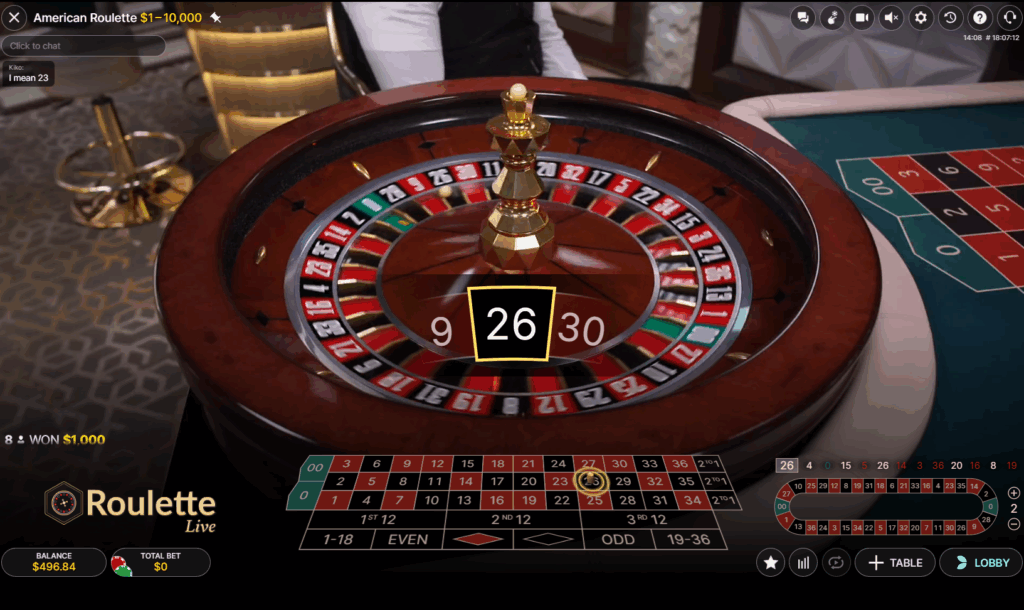
Ruletové kolo a sázecí plocha – vizuální přehled
Nejčastější otázky ohledně automaty online ruleta
Jaký je rozdíl mezi evropskou, americkou a francouzskou ruletou?
Evropská a francouzská ruleta mají jedno pole nula (0), zatímco americká má navíc pole 00, což zvyšuje house edge. Francouzská ruleta obsahuje pravidla La Partage a En Prison, která snižují výhodu kasina na poloviční ztrátu při sudých sázkách.
Jaké jsou nejlepší sázky pro začátečníky v ruletě?
Začátečníkům doporučujeme sázky na vnější možnosti (červená/černá, sudá/lichá, 1-18/19-36), které mají téměř 50% šanci na výhru. Tyto sázky jsou vhodné pro pochopení hry a minimalizaci rizika.
Co znamená house edge a RTP v ruletě?
House edge je matematická výhoda kasina – u evropské rulety je 2,7 %, u americké 5,26 %. RTP (návratnost hráči) je doplněk house edge, například u evropské rulety 97,3 %. Tyto hodnoty určují, kolik z vložených peněz se dlouhodobě vrací hráčům.
Jak funguje živá ruleta a liší se od automatické?
Živá ruleta se hraje s reálným krupiérem prostřednictvím videostreamu, což zvyšuje autentičnost. Pravidla a výplaty jsou stejné jako u standardní rulety, ale kurz je obvykle o něco nižší kvůli provozním nákladům.
Existuje strategie, jak v ruletě zaručeně vyhrát?
Ne, žádná strategie nezaručuje výhru, protože ruleta je hra náhody. Systémy jako Martingale mohou krátkodobě pomoci, ale v dlouhodobém horizontu vás house edge vždy připraví o peníze. Nejlepší je hrát s rozumem a stanovit si limity.
fire 81 automaty zdarma 81 — průvodce | fire 81 automaty zdarma 81
Jak si nastavit časové a finanční limity u rulety
Hazardní hry jsou určeny pouze osobám starším 18 let. Provozování hazardu je v České republice regulováno Ministerstvem financí ČR. Hráči se mohou sami vyloučit z účasti na hazardních hrách prostřednictvím Rejstříku vyloučených osob (RVO). Pokud máte pocit, že hazard přestává být zábavou, obraťte se na odbornou pomoc, například na linku podpory pro problémové hráče. Doporučujeme stanovit si předem časové a finanční limity a hrát pouze pro zábavu, nikdy se nesnažte nahánět prohry. Hrajte zodpovědně.
casina s bonusem bez vkladu 2026 — Nejvyšší bonusové nabídky